
Death and the Unstable Identity
The Black-Eyed BlondeThis flow traces how a presumed death becomes a problem of identity, exposing how appearances and official records can conceal rather than settle the truth.
increasing Bearing strength in each event
 decreasing
Bearing strength in each eventdecreasingThe Missing Man
Absence as Evidence
A Disappearance Without an Answer
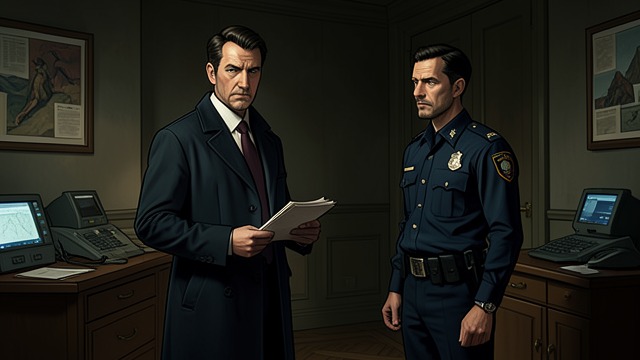
Nico Peterson first enters the story as an absence: he has vanished from his home and from Clare Cavendish’s life. The newspapers left on his porch and the uncollected milk suggest that this is more than a lover’s ordinary departure, but they do not establish what happened.
The Investigator’s Uncertainty
Philip Marlowe is asked to turn that absence into a traceable story. His early inquiries produce recollections and impressions rather than proof, establishing the novel’s central uncertainty: a person may be missing, dead, or deliberately erased, and each possibility can look like the others from a distance.
The Official Corpse
A Death on Record
The Police Finding
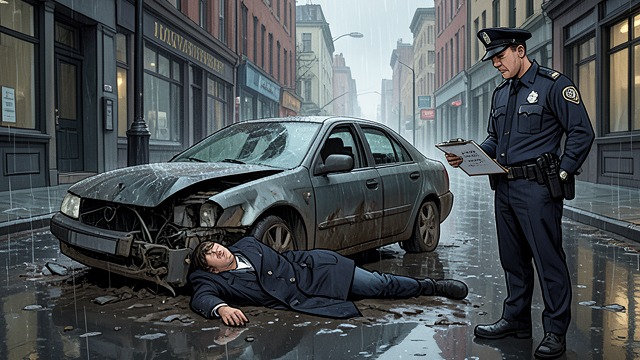
Joe Green tells Philip Marlowe that Nico Peterson died in an April 19 hit-and-run near Latimer Road. The official account seems to settle the question of absence by giving it a date, a place, and a cause.
Recognition Under Pressure
A body wore Nico’s clothes and carried his wallet, and Floyd Hanson says he recognized him at the scene. Yet those familiar identifiers are only a surface of certainty: the badly injured body had to be identified by someone else, and Clare says she later saw Nico alive. The discrepancy makes identification itself part of the mystery.
A Face in San Francisco
Recognition Against Evidence
The Claimed Sighting
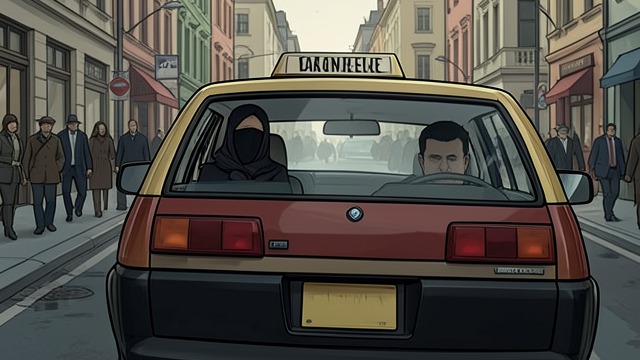
Clare Cavendish says that she saw Nico Peterson walking along Market Street in San Francisco, months after the supposed fatal accident. She was in a taxi and could not catch him, so her certainty rests on recognition rather than a conversation or a second witness.
The Case Reopens
Her report does not erase the evidence of the corpse, the wallet, or the identification. Instead, it places incompatible accounts side by side and forces Philip Marlowe to investigate how a dead man might still be moving through the world. The sighting turns a closed record into an active danger for everyone invested in Nico’s disappearance.
The Substituted Body
A Death Made to Order
The False Funeral
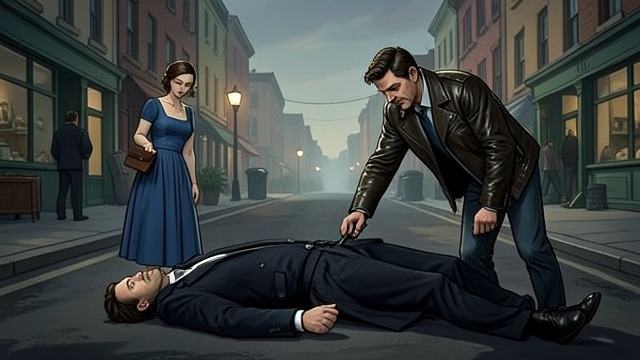
Nico Peterson eventually explains that he staged his death with help from Floyd Hanson and his sister, Lynn Peterson. A club worker’s body was dressed in Nico’s clothes, placed by the road, and identified by Lynn before cremation.
Identity as a Transaction
The scheme depended on treating outward signs—clothing, a wallet, a sister’s confirmation—as a substitute for an unambiguous identity. The dead man was made to stand in for Nico, while Nico escaped under the protection of an official conclusion. The deception demonstrates how easily a system can turn a plausible story into a recorded fact when no one has reason to challenge it.
The Returned Suitcase
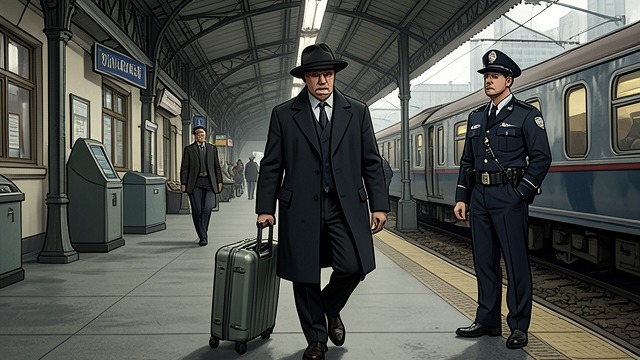
The Living Man Returns
A New Encounter
Nico Peterson contacts Philip Marlowe and meets him at Los Angeles Union Station, alive and carrying the suitcase that has drawn several dangerous parties into the search. His return does not restore the life he left behind: his sister is dead, his father is fleeing, and the false identity has become difficult to sustain.
No Final Restoration
Marlowe arranges for the police to recover the heroin while allowing Nico time to disappear again. The case establishes that factual identity can be uncovered without repairing the lives damaged by concealment. Nico’s survival answers the narrow question of whether he died, but the human consequences remain irreversible.
At the opening of the investigation
The morning after Marlowe first contacts the police
Several days before Clare hires Marlowe
Late in the investigation, after Marlowe meets Nico Peterson
Near the end, at Los Angeles Union Station
